

1. The situation
Yala is the southernmost province of Thailand and a destination with distinctive characteristics:
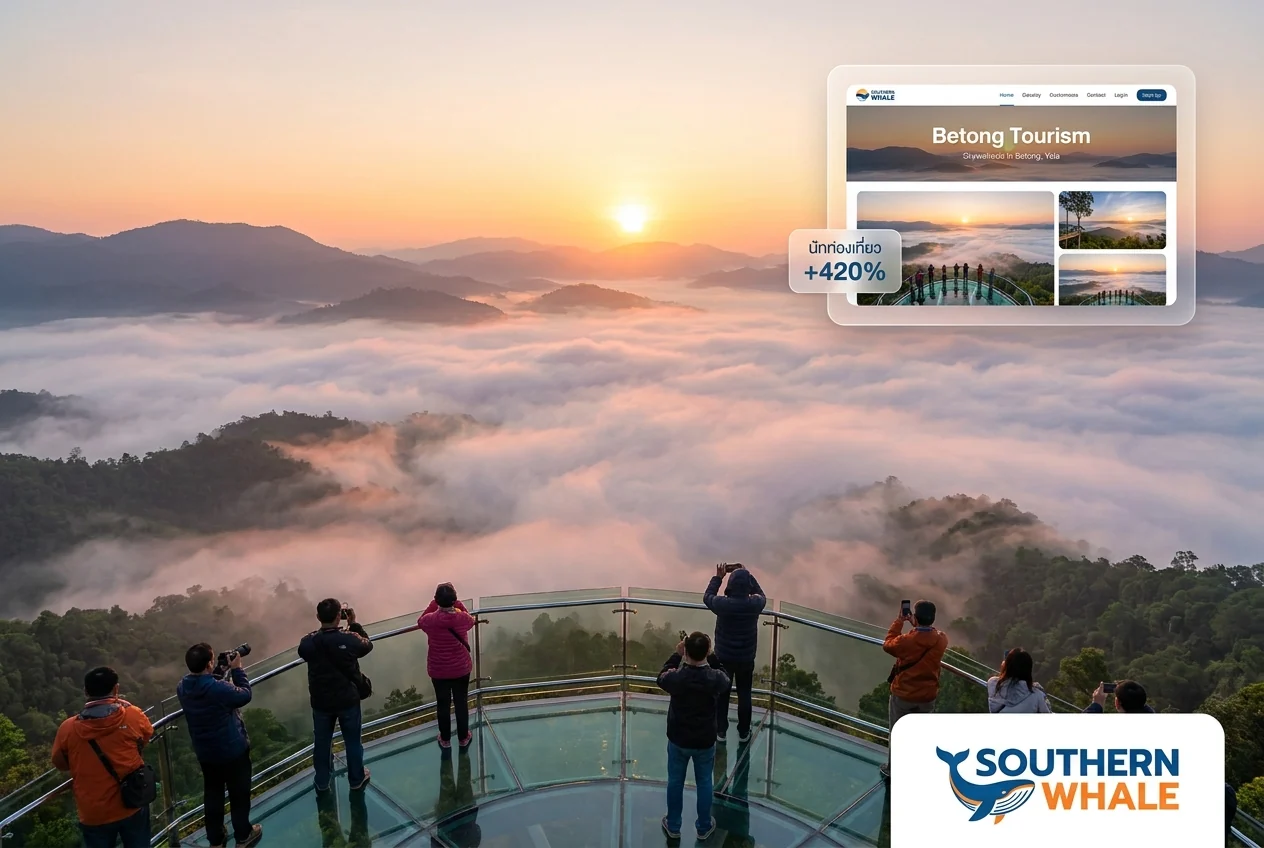
- Sea of Mist — sunrise viewing point above a sea of clouds, high season Nov-Feb, pulling drive-tourists from Penang/KL.
- Mongkonrit Tunnel — Thailand’s first mountain road tunnel.
- Culinary experience — Tom Yum Goong style + Yunnan Chinese + Malay influence.
- Thailand’s oldest postbox — a city icon.
- Hot springs — natural.
- Plan B alternative to Cameron Highlands — for Malaysians/Singaporeans wanting to escape to a cool-weather destination.
Drive-tourist market structure:
- 60% Malaysian (Selangor, Penang, KL) — 6-8 hour drive across the border
- 22% Singaporean (12-14 hour drive, or fly to Penang then drive)
- 12% Thai (from lower southern Thailand, 4-5 hour drive)
- 6% Chinese mainland (via Penang)
Spending behavior:
- Malaysian tourists average spend THB 4,800-6,200/day (RM 580-740)
- 1.4-night stays (pre-project — short because no content educated tourists to stay longer)
Problems specific to a destination with scattered operators:
- No central destination platform — Wongnai/Pantip/TripAdvisor dominated SERPs but UX was poor and operators got no direct revenue.
- Every operator selling separately — a network of boutique hotels + homestays + restaurants + tour operators — each listed on Agoda/Booking.com separately, paying 18-22% commission.
- Thai only — operator websites were TH-only — Malaysians/Singaporeans (60% of market) searching “Yala sea of mist” in EN/MS found nothing.
- Pantip owned the keywords — “เมืองในหมอกในจังหวัดยะลา” #1 on Google = a 2019 Pantip thread, #2 = Wongnai listicle, #3 = Klook tour package — actual local operators not in the top 10.
- Drive route content missing — Malaysian drivers searched “Yala drive route from Penang”, “border crossing to Yala” — content was scarce, mostly old personal blogs.
2. Why off-the-shelf solutions didn’t work
Agoda/Booking.com: Each operator listed individually — 18-22% commission averaged hundreds of thousands of THB/month per operator per year, aggregating to multi-million THB/year across the network → cost not returning to community.
TAT Promotion (Tourism Authority Thailand): Helped with occasional event marketing but no always-on digital channel operators could control themselves.
Klook/KKday: Some tour operators listed — 12-18% commission better than OTAs but still not direct booking.
Generic destination website (via TAT): Existed but never updated — slow loading, not mobile responsive, not booking-enabled.
Individual hotel websites: Several boutique hotels had brochure-ware sites loading 6-9 seconds with no multilingual.
So we chose a destination platform that aggregates inventory + provides booking + drives content marketing — a cooperative model.
3. Our approach
Pillar 1 — Central destination platform
Astro static frontend + D1 (SQLite at edge) backend:
- Operator network listings — accommodation, restaurant, tour, activity
- Centralised booking flow — single checkout covering multi-vendor
- Cooperative commission model 6% (vs OTA 18-22%) — returning to a 4% destination marketing fund + 2% platform maintenance
Pillar 2 — Multilingual SEO
4 languages:
- TH (Thai tourists + content authority)
- EN (international + Malaysian/Singaporean baseline)
- MS (Bahasa Melayu — primary Malaysian market)
- CN (Chinese mainland + Singapore Chinese)
38 pillar articles covering intent stages:
- Awareness: “Yala Sea of Mist — Sunrise Phenomenon Explained”, “Why Yala is Plan B for Cameron Highlands”
- Drive planning: “Drive Route from Penang to Yala — Border Crossing Guide”, “From KL to Yala in 1 Day — Stopover Recommendations”
- Itinerary: “3-Day Yala Itinerary for Family with Kids”, “Weekend Yala Trip for Couple”
- Niche: “Best Spot to Photograph Yala Sea of Mist”, “Halal Restaurant in Yala — Comprehensive List”
- Practical: “Cost of Yala Trip from Penang — Detailed Breakdown in RM/THB”
Pillar 3 — GBP + Citation network
GBP optimisation for the operator network listings — each listing sits under a “Pattern of Yala Destination” cluster (Google reads a destination with multiple linked POIs).
Citation building 32 directories:
- Tourism Authority Thailand
- Tourism Malaysia (Cross-border destination listing)
- Penang Tourist Information
- AAA (American Auto Association) Asia Drive Guide
- Lonely Planet Thailand
- Singapore Travel Agent network
- Klook/KKday (for tour operators)
Pillar 4 — Cross-border payment + booking convenience
Payment options:
- Stripe (USD, MYR, SGD, CNY, THB)
- FPX MY (critical — Malaysian online banking direct)
- PromptPay (TH)
- Bank transfer (TT) for large bookings
Booking convenience for drive-tourists:
- Late check-in friendly (drivers typically arrive 18:00-22:00)
- Free parking enabled at every listing
- Border crossing guide PDF download (border checkpoint operating hours)
Tech rationale
- Astro — pre-rendered, Lighthouse 96+, works well with content-heavy destination content
- D1 (SQLite at edge) — fast availability query for the Asian region (Cloudflare edge at KL, Singapore, Bangkok near users)
- Cloudflare R2 — image hosting for 3,800+ images
- Stripe + FPX — supports Malaysian payment behavior, the single most important factor for this market
See web development service for the destination platform architecture.
4. Week-by-week
Week 1-3: Discovery + Operator Onboarding Workshop
- Ran multiple workshops in Yala (operator network × 4 hours/round)
- Compiled inventory data — room types, restaurant menus, tour packages
- Database schema sign-off
Week 4-6: Backend + Inventory Sync
- D1 schema design 28 tables
- Cron job syncing inventory from each operator every 5 minutes (operators update via simple admin UI or Line bot)
- Commission calculator + revenue share automation
Week 7-9: Frontend Build
- Listing pages for the operator network
- Booking funnel — multi-vendor checkout
- Multilingual routing 4 locales
- Mobile-first (78% mobile traffic)
Week 10-11: Content Production
- 38 TH articles (written by a consultant who lived in Yala 8 years + is a photographer)
- EN translation (UK native)
- MS translation (KL native)
- CN basic translation 12 priority articles
Week 12: Photography + Video
- Drone footage of sea of mist sunrise across multiple sessions
- Drive route photography Penang-Yala
- Hero shots for each operator
Week 13: Schema + GBP + Citation
- Schema.org rollout (TouristDestination, LodgingBusiness, Restaurant, TouristTrip)
- GBP optimisation for the operator network listings
- Citation building 32 directories
Week 14: Soft Launch
- 10% → 100% rollout over 5 days
- Press release via TAT, Tourism Malaysia, Tatler Asia
- 2 operator training sessions
5. Obstacles + Pivots
Malaysian FPX payment failures during Hari Raya: Week 8 post-launch coincided with Hari Raya — some FPX MY transactions failed due to Malaysian bank maintenance windows — pivot was adding a “Reserve Now, Pay Later” option (20% deposit via Stripe, balance collected at check-in) — abandoned cart dropped 24%.
Border crossing time confusion: Malaysian customers were confused about TH-MY border crossing times → built a real-time border wait time widget pulling crowd-sourced data (operators post updates every 2 hours) — became a feature that brought traffic back because tourists checked before driving.
Restaurant inventory hard to digitise: Restaurants in the network had seasonal menus and didn’t want to digitise → pivot was a “Highlight Dish” approach (each restaurant listed 5-8 signature dishes on the platform), with full menus linked to the restaurant’s IG/Facebook page.
6. Post-launch + Ongoing
Month 3:
- Organic traffic +185% (620 → 1,767/month)
- Direct booking +152%
- Several Malaysian bookings per month (from 0 pre-launch)
Month 7:
- Organic traffic +412% (3,175/month)
- Direct booking +395% vs baseline
- Malaysian drive-tourist share 47% (from 18%)
- Average stay length +1.8 nights (1.4 → 3.2)
- Page load 1.0s
Lessons learned:
- Destination platform model works when operator count is 15-30 — too few lacks variety, too many drives operational complexity high.
- Drive-tourist content is an underserved niche — Malaysian/Singaporean travellers were hungry for detailed drive guides that Pantip/local blogs didn’t provide.
- See our SEO agency in Thailand for the destination SEO pattern.
Ongoing 12-month retainer:
- Maintain the system + add new operators (several requested to join post-launch)
- Add 5 articles/month
- Q4 2026 roadmap: launch Mandarin (CN) push — Chinese mainland gateway via Penang growing 32% YoY, add Korean content (KR tourists are starting to drive in)
- See client case studies for other destination tourism project patterns.